
In This Article
It’s 38°F, the light just turned red, and your visor has quietly turned into a bathroom mirror. You crack it open. Cold air slaps your face, your eyes water, and the light goes green before you can see it. Anyone who rides in cold, damp or humid weather knows this tiny drama well.

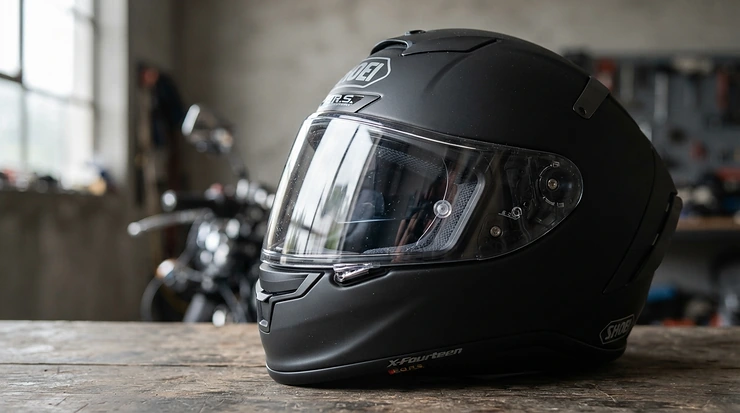
Fogging is not a minor annoyance. A visor you can’t see through is a safety problem, which is why a full face helmet with pinlock ready visor for fogging deserves a place at the top of your shopping list. The fix is not exotic. It is physics, applied with a thin sheet of plastic and a silicone seal.
This guide covers seven real helmets, what their anti-fog setups actually include (and don’t), and how to get the most from them. Along the way, you’ll see how a pinlock insert lens, a double pane visor and a humble breath deflector work together. A motorcycle helmet exists to protect your head in an impact, but protection starts with seeing the road.
One honest note first. I haven’t ridden any of these helmets, so this article is based on published specs, retailer listings and aggregated reviewer feedback. Where something couldn’t be verified, I say so. Prices below are ranges, so check current pricing before you buy.
Quick Comparison: 7 Pinlock-Ready Full Face Helmets at a Glance
| Helmet | Pinlock Situation | Price Tier | Best For |
|---|---|---|---|
| Shoei RF-1400 | EVO insert reportedly included | Roughly $600-$700 | Premium all-weather commuting |
| AGV K6 S | Pinlock 120 MaxVision included | Roughly $500-$750 | Light weight, long rides |
| Arai Regent-X | Pinlock-ready shield, insert separate | Roughly $525-$660 | Riders who value fit and craft |
| HJC i71 | Pinlock-ready HJ-38 shield; insert varies by seller | Mid-range; check current price | Sport-touring with a sun shield |
| HJC C10 | Pinlock-ready HJ-34P shield | Around $130-$140 | Budget fog-fighting |
| Scorpion EXO-R430 | EverClear shield; Pinlock-ready shield optional | Budget tier; check current price | Entry-level riders |
| Icon Airflite | Not Pinlock-ready by default; add-on needed | Check current price | Style-first riders willing to add parts |
Look at the table through a fog lens rather than a price lens. The Shoei RF-1400 and AGV K6 S are the “open the box and ride” options, because the anti-fog insert is reportedly part of the package. The HJC C10 is the value play, as long as you budget for the insert if your listing doesn’t include one. The Icon Airflite is the cautionary tale: gorgeous, but you’ll be shopping for extra parts.
💬 Just one click — help others make better buying decisions too!😊
What Is a Full Face Helmet with Pinlock Ready Visor for Fogging?
A full face helmet with pinlock ready visor for fogging is a helmet whose shield has two small pins molded in, so a Pinlock anti-fog insert lens can clip inside it. The insert forms a sealed air gap, like double-glazed windows, which keeps your breath from condensing on the visor in cold or humid weather.
That’s the whole concept, and it’s elegant. The insert is made from moisture-absorbing material, and a silicone bead around its edge seals it to the main shield. Pinlock’s own materials describe the principle as a double-glazing effect, with the trapped air acting as an insulator.
The phrase “Pinlock ready” matters. It means the shield is prepared for an insert, not that the insert is in the box. Some manufacturers include the lens, some sell it separately, and a few make you buy a different shield first. Think of “Pinlock ready” as a socket and the insert as the appliance.
Top 7 Full Face Helmets with Pinlock Ready Visors: Expert Analysis
1. Shoei RF-1400 — premium all-weather quiet and clarity
The Shoei RF-1400 earns its place by arriving with its fog defense built in. A retailer listing states it includes the Pinlock EVO pins and lens insert, along with a breath guard and chin curtain.
On specs, the CWR-F2 shield uses a redesigned mounting system, and reviewers note the Pinlock mounting “buds” sit out of your peripheral vision. Weight is listed around 3.62 lbs, and certification includes DOT and Snell. A wider EVO lens means less visible edge in your sightline, which matters most at night on wet roads.
Based on the spec sheet, this suits riders who commute year-round and want to stop thinking about gear. The catch is price. You’re paying for refinement, not just anti-fog hardware.
Reviewer sentiment is strong. The RF-1400 sits around 4.5 out of 5 across several hundred reviews on one major retailer, with frequent praise for quietness and build quality.
Pros:
- ✅ Pinlock EVO insert reportedly included in the box
- ✅ Very quiet, with above-average ventilation per reviewers
- ✅ Breath guard and chin curtain included
Cons:
- ❌ Premium price sits well above the other picks
- ❌ Replacement shields and inserts are costly
Price range: roughly $600-$700, a fair verdict if you ride most days and keep helmets for years.
2. AGV K6 S — lightest in this lineup
The AGV K6 S is the featherweight here at roughly 3.02 lbs, and that matters more than it sounds. A lighter helmet means less neck fatigue on long cold rides, when you’re already tensing against the wind.
Listings state a Pinlock 120 MaxVision insert is included, and the shield is described as anti-scratch with a wide field of view. The shell is a carbon-aramid composite, certification is ECE 22.06 and DOT, and the shape is intermediate oval. The interior is glasses-friendly, which is a bonus because eyewear adds its own fogging headaches.
Here’s what the spec sheet won’t tell you: shape matters. An intermediate oval fit won’t suit every head, so try one on before committing. Reviewers rate it around 4.5 out of 5 on one major U.S. retailer, with common praise for comfort and light feel.
Pros:
- ✅ Pinlock 120 MaxVision insert included
- ✅ Very light carbon-aramid shell
- ✅ Wide eyeport and glasses-friendly interior
Cons:
- ❌ Intermediate oval shape won’t suit every head
- ❌ Price climbs fast for some graphics
Price range: roughly $500-$750 depending on graphic and seller, a strong value verdict because the anti-fog lens is already covered.
3. Arai Regent-X — hand-finished fit with a fog-fighting catch
The Arai Regent-X is Arai’s accessible entry point, and it comes with a clear caveat: the VAS-V shield is Pinlock ready, but a reviewer notes the insert is not included. You’ll need to add it (the compatible lens is the Pinlock 120XLT, DKS159).
Weight is listed around 3.41 lbs, with 11 vents and a wider base opening that makes it easier to put on and take off. Certification is DOT and Snell. The variable-axis shield system positions the pivot lower than most helmets.
My read: this is a “buy it for the fit, budget for the lens” helmet. Arai’s intermediate oval shape rewards riders whose heads match it. Reviewer sentiment sits around 4.5 out of 5 across a couple hundred reviews, with praise for comfort and quietness.
Pros:
- ✅ Excellent build quality and comfort reputation
- ✅ Strong ventilation with 11 vents
- ✅ Easy on and off thanks to wider opening
Cons:
- ❌ Pinlock insert not included
- ❌ Liner is only partly removable
Price range: roughly $525-$660 at retailers, a solid verdict if fit is your priority, but add the lens cost to your total.
4. HJC i71 — sport-touring with a built-in sun shield
The HJC i71 adds a drop-down sun shield, which means one fewer shield swap when the light changes. The Pinlock-ready shield is the HJ-38, which accepts a Pinlock 70 MaxVision insert (DKS466).
Insert inclusion is inconsistent. One European retailer lists the i71 as equipped with a Pinlock 70, while a U.S. retailer sells the lens separately for roughly $35. That’s a classic “check your exact listing” situation.
On paper, a Pinlock 70 is a good everyday insert, though higher-numbered inserts promise longer fog resistance in tough weather. For commuters, the sun shield plus insert combination is the appeal. I couldn’t verify a deep review pool for the i71 specifically, so treat sentiment as unconfirmed.
Pros:
- ✅ Built-in sun shield cuts shield swaps
- ✅ Pinlock-ready HJ-38 shield
- ✅ Tool-free shield change in the HJC family
Cons:
- ❌ Insert inclusion varies by seller
- ❌ Limited review data found in this research
Price range: mid-range, so check current pricing; a good value verdict if your listing bundles the insert.
5. HJC C10 — budget fog-fighting that punches up
The HJC C10 proves a full face helmet with pinlock ready visor for fogging doesn’t require a premium budget. The HJ-34P shield is Pinlock ready, blocks 99% of UV, and offers up to 10mm wider field of view according to the manufacturer’s listing.
A U.S. retailer lists it with a breath guard and chin curtain, plus Bluetooth clamp space. Some listings bundle the Pinlock DKS463 insert; others say it’s sold separately. Confirm before checkout.
The shell is polycarbonate composite with an Advanced Channeling Ventilation System, and one listing states ECE 22.06 approval. Reviews of the matching HJC Pinlock insert at a UK retailer are enthusiastic, with buyers saying they can ride with the visor fully closed.
Pros:
- ✅ Pinlock-ready HJ-34P shield at a low price
- ✅ Includes breath guard and chin curtain
- ✅ Bluetooth-friendly clamp space
Cons:
- ❌ Insert may be a separate purchase
- ❌ Polycarbonate shell is heavier than carbon rivals
Price range: around $130-$140 at one retailer, an excellent value verdict even after adding an insert.
6. Scorpion EXO-R430 — entry-level with smart extras
The Scorpion EXO-R430 layers two defenses. The base shield has EverClear, a thermally bonded anti-fog coating, and the helmet includes a breath deflector and chin curtain. If cold weather still wins, you can step up to a Pinlock-ready shield and insert.
That layered approach is cost-effective. The coating handles mild fog, the deflector redirects exhaled air, and the insert covers the nastiest conditions. The shell is polycarbonate, the shield is Optical Class 1, and the cheek pads have an emergency release.
Reviewers rate it around 4 out of 5 on one retailer, though from a smaller pool of about 30 reviews. The Pinlock-ready shield and insert are optional extras, so total cost rises if you add both.
Pros:
- ✅ EverClear coating on the stock shield
- ✅ Breath deflector and chin curtain included
- ✅ Emergency cheek pad release
Cons:
- ❌ Pinlock shield and insert are optional extras
- ❌ Smaller review pool than rivals
Price range: budget tier, so check current pricing; a good value verdict for newer riders.
7. Icon Airflite — striking looks, with an add-on requirement
The Icon Airflite is the odd one out, and I’m including it for honesty’s sake. A UK reviewer notes it isn’t Pinlock ready as standard, so riders must buy a Pinlock-ready Fliteshield and a matching insert separately.
Retail listings show the Pinlock-ready shield in a roughly $40-$60 range and inserts from about $35 to $95, with the ProtecTint photochromic version at the top end. That’s real money on top of the helmet.
Buyer feedback includes practical tips: the shield needs to be bent a fair bit to seat the insert, and chemical cleaners can damage it. Reviews of the helmet itself are strong, around 4.8 out of 5 from over a hundred UK reviews.
Pros:
- ✅ Distinctive, widely admired styling
- ✅ Large visor with a wide field of view
- ✅ Genuine Pinlock options exist for it
Cons:
- ❌ Not Pinlock ready out of the box
- ❌ Extra shield and insert raise total cost
Price range: check current price; a fair value verdict only if you budget for the anti-fog add-ons.
✨ Don’t Miss These Exclusive Deals!
🔍 Take your winter riding to the next level with these carefully selected helmets. Click on any highlighted item to check current pricing and availability. A clear visor is one of the cheapest safety upgrades you’ll ever make!
How to Choose a Full Face Helmet with Pinlock Ready Visor for Fogging
Follow these seven steps, in this order:
- Confirm the insert is included. Read the listing’s box contents. “Pinlock ready” alone means you’ll buy the lens separately, which adds roughly $30-$95 depending on type.
- Match the fog rating to your climate. Pinlock 70, 120 and EVO are different performance tiers, with higher numbers aimed at tougher conditions.
- Check your head shape. An intermediate oval helmet on a round head creates pressure points, and gaps break your seal.
- Look for a breath deflector. It’s a cheap, effective second line of defense.
- Verify certification. Look for the DOT label, ECE 22.06 or Snell, depending on your market.
- Think about glasses. Eyewear grooves and a snug chin curtain reduce glasses fogging.
- Budget for spares. Shields scratch, and inserts age, so plan for replacements.

How a Pinlock Insert Lens and Double Pane Visor Actually Work
Fog is just condensation, and condensation has a simple trigger. When warm, moist breath meets a surface colder than its dew point, water vapor turns to liquid. Your outer visor is that cold surface on a winter ride.
A pinlock insert lens attacks the problem in two ways. First, it creates a double pane visor effect, trapping a layer of air between the shield and the lens so the surface facing your face stays warmer. Second, the insert’s surface absorbs moisture rather than letting it bead into fog.
Pinlock levels (70, 120, EVO) are different performance tiers. A 70 handles everyday commuting, while a 120 or EVO gives more margin in harsh conditions. EVO lenses are reportedly wider, which means less visible edge in your peripheral vision.
The silicone seal is the hero here. If the seal lifts or the insert isn’t seated properly, moist air slips in and the benefits fade quickly. That’s why installation and cleaning matter as much as the part itself.
Breath Deflector: The Cheap Upgrade Many Riders Skip
A breath deflector is a small insert at the chin bar that directs your exhaled air downward, away from the visor. Retail descriptions consistently call it a simple way to reduce fogging, especially in cold weather.
Several helmets here include one. The Shoei RF-1400, HJC C10 and Scorpion EXO-R430 are all listed with a breath guard or deflector in the box. If yours doesn’t include one, manufacturers often sell model-specific versions, and one HJC deflector listing shows a price around $8.
The honest limits? A breath deflector reduces fog but doesn’t eliminate it. Think of it as defense in depth: deflector plus Pinlock plus a snug chin curtain. Each layer catches what the previous one missed.
Fit is critical. A deflector that sits crooked or presses on your nose becomes an irritation. Install it, ride a short distance, and adjust before a long trip.
Anti Fog Full Face Motorcycle Helmet for Cold Weather: What to Look For
Cold weather is the ultimate anti fog full face motorcycle helmet test. The temperature gap between your breath and the shield is widest, so fogging is fastest. Here’s what to prioritize.
Start with the insert level. In an anti fog full face motorcycle helmet for cold weather, a Pinlock 120 or EVO is a sensible target over a basic 70, because the extra fog resistance buys margin when it’s truly cold.
Next, look at seal points. A chin curtain and breath deflector stop warm air from reaching the visor. Then think about ventilation: a helmet that lets you crack a vent slightly can purge humid air without dumping cold air onto your face.
Finally, pair gear sensibly. Reviewers on riding forums often mention balaclavas with built-in breath deflectors for colder rides. Whatever you choose, keep your breath pointed down, not up.
Full Face Helmet with Fog Resistant Visor Insert: Install and Care Guide
A full face helmet with fog resistant visor insert only works if the insert is fitted and maintained properly. Here’s a practical routine.
Installing the insert:
- Remove the shield from the helmet and lay it on a clean, soft cloth.
- Peel the protective film from both sides of the insert.
- Slot the insert’s holes over the two pins and press the silicone edge into the shield recess.
- Check that the seal sits flat all the way around, with no gaps.
Pinlock’s own support pages include model-specific installation and cleaning guides, which are worth a look because pin styles differ by helmet.
First 30 days: Avoid touching the inner surface (skin oils degrade the moisture-absorbing layer). One retailer’s care note says to avoid touching the inner surface and to install on a clean shield.
Cleaning: Don’t use chemical cleaners. A UK buyer reported replacing an insert after cleaning it with chemicals. Rinse gently with lukewarm water, pat dry or air dry, and follow the manufacturer’s instructions.
Replacement: Inserts wear out. One reviewer on a UK retailer’s Scorpion Pinlock listing reported needing a replacement within a year, so treat the lens as a consumable and check the seal regularly.
Real-World Scenarios: Matching the Right Helmet to the Rider
The year-round commuter. Picture a rider covering 12 miles each way in damp, cold mornings, with a budget around $600-$700. The Shoei RF-1400 fits: the insert is included, the helmet is quiet, and it’s built for daily wear. The extra cost is spread across years of use.
The weekend sport-tourer. Think of a rider who does 150-mile loops with changing light. The HJC i71 and its sun shield save stops, and the Pinlock 70 handles most conditions. Add a breath deflector for cold starts.
The first-time buyer on a tight budget. With roughly $200 total to spend, the HJC C10 or Scorpion EXO-R430 make sense. Put aside $30-$40 for an insert, and you still end up with a smart fog-fighting setup.
The long-distance tourer. For all-day rides, the light AGV K6 S reduces neck fatigue, and its included Pinlock 120 means one less thing to buy. Test the fit first, because shape is personal.

Problem to Solution: Fixing the Most Common Fogging Headaches
Problem: the insert fogs on the edges. The seal isn’t fully seated. Remove the insert, check the silicone bead for debris, and reseat it carefully.
Problem: glasses fog even with a clear visor. Glasses are a separate surface. The usual fix is a snug chin curtain and breath deflector, and keeping the visor sealed so cold air isn’t forced against warm lenses.
Problem: the visor fogs the moment you stop. At a red light your airflow vanishes while breath keeps coming. A breath deflector plus a barely cracked vent helps, and if your helmet has a visor detent, use the first notch sparingly.
Problem: scratches create glare. Pinlock-ready shields are separate parts, so replace a scratched one rather than riding with glare. A Shoei RF-1400 replacement shield, for instance, runs roughly $75-$130 depending on tint.
Problem: the insert looks cloudy. Cloudiness may mean wear or damage to the moisture-absorbing layer. Replacing it is cheaper than a crash.
Common Mistakes When Buying a Pinlock-Ready Helmet
The biggest mistake is assuming “Pinlock ready” means “Pinlock included.” As the Arai Regent-X and Icon Airflite show, the lens can be a separate purchase.
Second, buying the wrong insert. Lenses are shield-specific, so a lens for one helmet won’t fit another. The Shoei RF-1400 insert is labeled for its CWR-F2 shield, and AGV and HJC have their own part numbers.
Third, ignoring fit in favor of features. A great visor on a badly fitting shell leaks air and distracts you. Fourth, buying a race visor for the street. A UK listing for an AGV K6 race visor states it is not road legal, so confirm road legality before you click.
Finally, don’t skip the tint warning. A dark smoke insert or shield is for bright light, and it’s a poor choice for night riding.
Features That Actually Matter (And Those That Don’t)
Matter: a properly sealed Pinlock insert, a breath deflector, a chin curtain, comfortable fit, and a certified shell. These directly affect whether you can see and whether you’re protected.
Nice to have: an internal sun shield (as on the HJC i71), Bluetooth-ready clamp space, quick-change shield systems. They add convenience without changing core performance.
Mostly marketing: exotic graphics, “race replica” badges, and extra shield colors you’ll never swap. If a feature doesn’t help you see, breathe or stay comfortable, it should be the last thing you pay for.
A useful rule: spend on the parts that touch your face and your field of view first. Everything else is a bonus.
Long-Term Cost and Maintenance: What You’ll Really Spend
Sticker price rarely tells the full story. Here’s a simplified view of total cost of ownership across the seven picks.
| Helmet | Anti-Fog Status | Likely Extra Spend | Best For |
|---|---|---|---|
| Shoei RF-1400 | Insert reportedly included | Replacement insert/shield over time | Long-term daily riders |
| AGV K6 S | Pinlock 120 included | Replacement insert over time | Light-weight seekers |
| Arai Regent-X | Insert separate | Add insert at purchase | Fit-first buyers |
| HJC i71 | Varies by seller | Possibly an insert | Sun-shield fans |
| HJC C10 | Pinlock-ready shield | Possibly an insert (~$25-$40) | Budget riders |
| Scorpion EXO-R430 | EverClear on stock shield | Pinlock shield + insert optional | New riders |
| Icon Airflite | Not Pinlock ready | Shield + insert add-ons | Style-first riders |
The takeaway: a cheaper helmet with a bundled insert can undercut a pricier one that needs add-ons. The HJC C10 may stay the cheapest even after adding a lens, while the Icon Airflite can climb quickly once the Pinlock shield and insert are added. Per-use cost drops the longer you keep a helmet, which is why durable, well-fitting options often win over time.
Safety, Certification and Compliance Guide
Fog resistance matters, but certification matters more. In the U.S., a legal helmet carries a DOT certification label. NHTSA’s guidance on identifying unsafe motorcycle helmets explains that helmets meeting FMVSS 218 carry a certification label on the back, and it warns that novelty helmets can fail safety tests.
NHTSA research, as reported by webBikeWorld, estimates a helmet that conforms to FMVSS 218 reduces the risk of dying in a crash by 37 percent. Many helmets also carry ECE 22.06 or Snell marks, which use different test methods.
The practical rule: check the label first, then judge fog features. Also keep your shield road-legal. Visors labeled “not road legal” are for track use only. If you’re ever unsure, ask the retailer for the certification details of the exact shield you’re buying.
FAQ
❓ Is a Pinlock ready visor the same as a Pinlock visor?
❓ Can I fit a Pinlock insert to any helmet shield?
❓ Do breath deflectors help riders who wear glasses?
❓ How long does a Pinlock insert last?
❓ Should I use a tinted insert at night?
Conclusion
If you ride in cold or damp weather, the case for a full face helmet with pinlock ready visor for fogging is hard to argue with. The seven helmets above all take fogging seriously, but they differ on the detail that trips up buyers: whether the insert is actually in the box.
For a grab-and-go solution, the Shoei RF-1400 and AGV K6 S are the clearest picks, with the insert reportedly included. For value, the HJC C10 and Scorpion EXO-R430 make fog-fighting accessible, provided you budget for an insert where needed. The Arai Regent-X rewards fit-first riders, the HJC i71 adds a sun shield, and the Icon Airflite is for those who accept add-on costs for its looks.
Remember the layered strategy: a Pinlock insert lens, a double pane visor seal, a breath deflector and a snug chin curtain beat any single fix. Check the listing, confirm the certification, and look after the lens.
✨ Ready to ride with a clear view? 🔍 Click on any highlighted helmet to check current pricing and availability, and give your cold-weather commute the visor it deserves!
Recommended for You
- Dual Visor Full Face Helmet for Riders With Glasses: 7 Best (2026)
- Full Face vs Modular Helmet for Commuting: 7 Best Picks (2026)
- Full Face Motorcycle Helmet for Small Round Head: 7 Best (2026)
Disclaimer: This article contains affiliate links. As an Amazon Associate, I earn from qualifying purchases. If you purchase products through these links, we may earn a small commission at no additional cost to you.
✨ Found this helpful? Share it with your friends! 💬🤗
